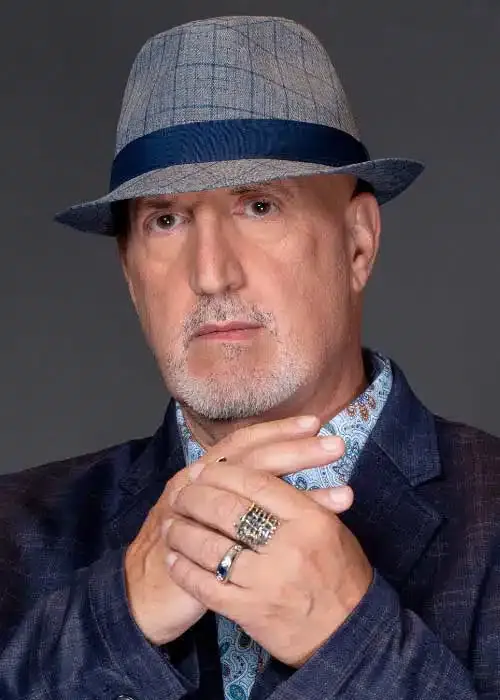
My first real lesson in persuasion didn't come from a book. It came from my grandfather's dining room when I was 8 years old — we'd have dinner with the family, the whole family, aunts, uncles, cousins, great aunts and uncles and their children and children's children, 40 or so people was normal. After dinner the men would go to watch sports together, football, baseball, whatever season it was on the television in the living room, the women would retire to the kitchen to clean up and talk with one another, the kids would go outside and play, and my grandfather would remain at the table and drink espresso coffee for a while and I would sit with him. Then different family members would come and speak with him, mostly in Sicilian, often in Italian, and sometimes in English about what was happening in their lives that they wanted help or advice about, and my grandfather, Giuseppe, would listen quietly. Then after he'd heard everything they had to say he make a comment, usually something short and simple, and everything would change for the person he was listening to, somehow he seen into the real issue and spoke to it, not what was happening on the surface as a result but the foundation of where they were acting from and that was enough to make a difference. I knew then I wanted to become that man.
What I found is that almost everything taught about persuasion starts in the wrong place. It starts with techniques to apply to other people — scripts, frames, objection-handlers, closing sequences. Some of it works. That's why it survives. But it puts persuasion outside of you, and the day comes when the room doesn't move — not because you made a mistake, but because techniques alone were never the real thing.
My grandfather wasn't working on anyone. He stepped into what was already happening and changed what their thinking and actions pointed at. That distinction is the foundation of everything at Persuasive Architecture. Thirty-five years of studying it, practicing it in boardrooms and negotiations where failure was not an option, and training practitioners to do it at the level where consequences are real.
Today, I train and mentor folks who want to learn how to change with people, e.g., coaches, consultants, advisors, trainers, therapists, and others who want the ability to do what my grandfather did with other individuals and groups of people. My specialty is working with others, e.g., practitioners and leaders, who want to shift groups of individuals into elite, high-performance teams, who can and do operate in fields of consequence where the stakes are considerable and failure is not an option. I also work directly one-to-one with professionals and principals, in small curated cohorts and groups, as well as taking on organizational assignments working with executives,, entrepreneurs, founders, business owners, financial advisors, wealth managers, private bankers, and principals who are already operating at a high level — people for whom the outcome matters and there is exactly one attempt at it. Not motivation. Not inspiration. The serious, developmental work of becoming dramatically more persuasive when it counts.